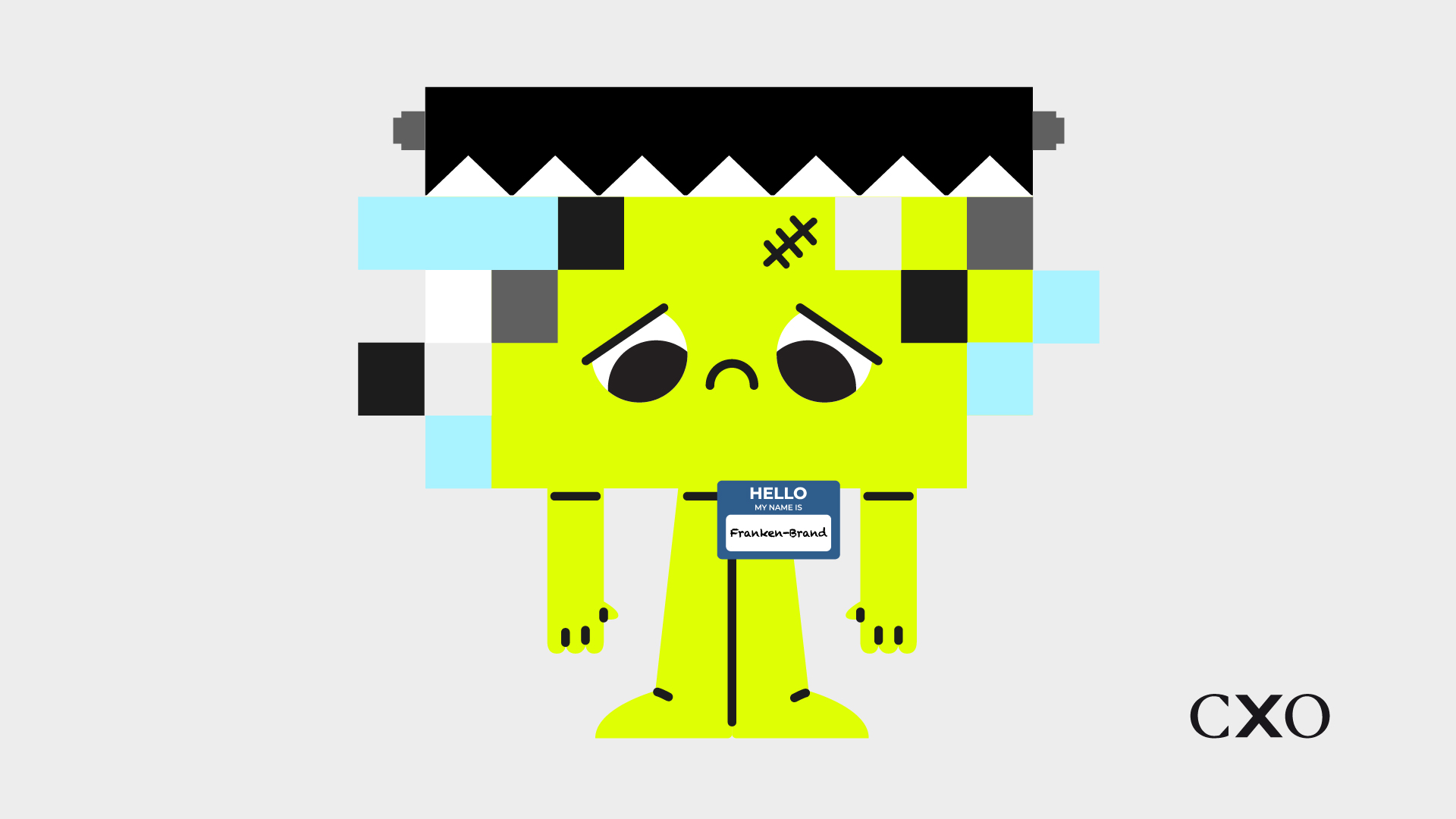
When I was starting out, I was 100% sure I wanted to work exclusively with B2C companies.
I loved entertainment, pop culture and fashion. B2B felt intimidatingly unfamiliar and yes, brain-numbingly boring. Back then, I assumed building a successful B2B brand was all about winning with logic.
At the PR firm where I landed my first job out of college, agency leaders and clients often reminded me, “High-tech buyers don’t buy on emotion. They buy on reason.”
I still remember sitting in client meetings wondering whether I was ever going to get excited about the nuances of object-oriented databases and optical character recognition (spoiler alert: not really). I bought People magazine at lunch and secreted it away in my desk drawer so nobody at work would question whether I was serious enough to ‘get’ B2B.
I was convinced I was dooming myself to a career devoid of creativity and feeling (cue dramatic ‘woe is me’ music and sad lighting).
It didn’t take long before I found out that enterprise technology is, in fact, a highly rational purchase. Complex buying committees scrutinize features, implementation timelines and ROI.
But I also discovered something else.
Every buying committee is just a group of human beings.
When competing solutions are relatively equal, people naturally gravitate toward the brand that makes them feel something.
And that sounded like something I wanted to learn how to do.
Emotion Isn’t One Thing
Funny enough, the conversation has almost completely flipped since I started my career. Today nobody argues that emotion matters in B2B. The debate is about which emotions matter.
The biggest mistake B2B marketers make is no longer ignoring emotion. It’s assuming every buyer is looking for the same one.
A CFO evaluating ERP software isn’t driven by the same emotional needs as a CMO investing in a creative platform or a CIO selecting a cybersecurity partner. The real opportunity for B2B brands isn’t simply to “sell with emotion.” It’s to understand which emotions their buyers need to feel and why.
When we’re developing brand positioning, we often start by asking our client a simple question: How do you want your most important buyer to feel after they choose your product or solution?
That usually spurs a lot of expected adjectives … innovative, smart, prepared.
It’s only when we get into the emotional needs and feelings behind those words that things get really interesting.

What Great B2B Brands Know
The product or service matters a whole lot, but so does the way it makes the buyer feel.
I’ve come to believe that most enterprise purchases are deeply personal. Because every decision reflects a bet someone is making on their reputation, leadership and career experience.
Some of the world’s most respected B2B brands understand this exceptionally well.
- When I look at ServiceNow, it’s clear that it isn’t about selling a software platform. They are selling relief. Executives overwhelmed by disconnected systems, organizational complexity and AI disruption aren’t just buying better workflows. They’re buying the feeling that work no longer needs to be so chaotic and risky. You can see this brand idea in full effect as CEO Bill McDermott touts his AI strategy, assuring customers that the company’s “AI Control Tower” will move them from “AI chaos to AI discipline.”
- On the other hand, a brand like Autodesk unapologetically appeals to ambition. Rather than focusing exclusively on technical capabilities, it celebrates the architects, engineers and creators who are changing how the world is designed and made. When you visit their website or experience their marketing, you feel proud to be one of these people. The emotional reward isn’t just efficiency. It’s the personal satisfaction of making something that leaves a lasting mark.
- Schneider Electric sells purpose as much as it sells energy technology. Pointing to a long history of turning power into progress, the company consistently tells a story about how it innovates to drive positive long-term impact. Customers aren’t simply investing in infrastructure. They’re becoming the proud energy partners who help organizations become more responsible, resilient and sustainable.
Of course none of this works if the product isn’t great. That’s table stakes.
But these companies know that people rarely fall in love with features and capabilities alone. And they refuse to make their products their entire story.
Betting on Humanity
We’ve seen this firsthand in our own work. When we partnered with Avaya, we found a category dominated by technical language, platforms, integrations, infrastructure and features.
Together, we helped shift the conversation from the “contact center” to the “connection center.” It was a subtle change in language, but a major shift in meaning.
The insight was simple: Organizations weren’t chasing better transactions. They were chasing better relationships.
That’s the power of emotion in brand positioning. It doesn’t change what a product does. It changes what the product means.
AI Makes it Matter More
Ironically, AI is making emotion in branding more important, not less.
Anyone can ask ChatGPT to compare five vendors in about thirty seconds. But when the stakes are career-defining, data isn’t enough. People still need the confidence to act.
AI can generate information. It can’t generate conviction.
In a 2026 Gartner survey of B2B buyers, 69% said they preferred to validate AI-generated insights with a sales representative. Gartner also found that buyers were 32 percentage points more likely to say a representative made them feel confident in their purchase decision than GenAI.
In other words, AI makes it a lot easier to gather facts.
But it isn’t replacing human trust.
B2B Branding Isn’t Boring
Looking back, it’s easy to smile remembering young professional Kathleen who thought B2B was where her imagination was headed to die.
It turned out to be the polar opposite.
The spreadsheets, procurement processes and technical evaluations are all real. But they sit on top of something deeply human. The brands that win aren’t simply the ones with the best products. They’re the ones that understand how their customers want to feel when they finally say yes.
I said yes to a career in B2B branding and communication, but what I really wanted was to feel creative and tuned into what mattered to people. And that’s why I stayed.
In an age where information is increasingly generated by machines, that kind of human connection is maybe the greatest brand advantage of all.
At CXO Communication, we build brands that logically conquer and emotionally connect. If you’d like to explore what that could look like for your business, we’d love to talk: info@cxocommunication.com.